Butterfly Floral Moon
A Boho Embroidery Design That Breathes—Not Just Decorates
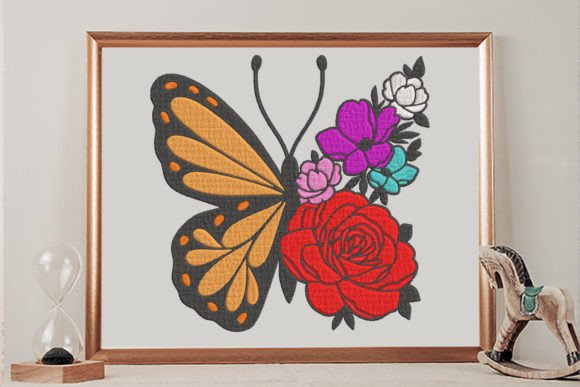
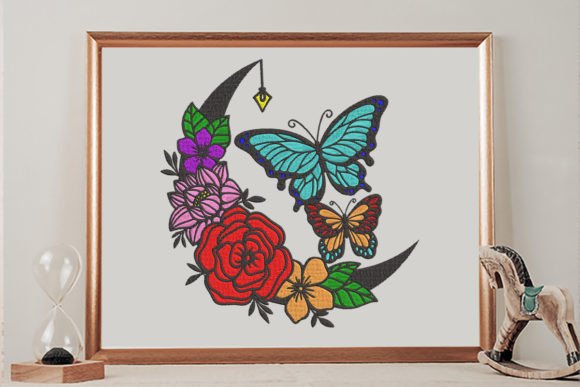
As someone who’s stitched hundreds of embroidery files onto everything from organic cotton baby onesies to heavyweight denim jackets, I opened Butterfly Floral Moon expecting charm—but what struck me first wasn’t prettiness. It was *air*. The negative space around the butterfly’s wings, the gentle curve of the crescent moon cradling a loose cluster of wild florals—it doesn’t shout. It invites. That’s rare in machine embroidery designs, where density often wins over delicacy.
What It Feels Like in Real Life: A Tote Bag That Starts Conversations
Last week, I used Butterfly Floral Moon on a natural linen tote for a local boutique’s spring launch. No embellishment—just the design centered on the front panel, stitched in soft ecru thread on oat-colored fabric. Customers didn’t just grab it; they paused. One woman traced the wing outline with her finger and said, “It looks like something that grew there.” That’s the quiet power of this design: it reads as handmade, intentional, and quietly confident—not digitized or mass-produced.
It’s not fussy, but it’s not basic either. The floral elements aren’t symmetrical bouquets—they’re asymmetrical, slightly uneven, with subtle variation in petal size and stem length. That irregularity is what makes it feel alive, especially on textured fabrics like linen, canvas, or unbleached cotton. On smooth polyester blends? It still holds up—but loses some of its earthy breathability.
Where It Shines (and Where It Asks for Extra Care)
Butterfly Floral Moon excels in projects where mood matters more than message: nursery wall hangings, yoga mat straps, aprons for herbalists, tea towels for slow-living brands, and pillow covers for boho-chic bedrooms. Its shape flows naturally across curved surfaces—like the rounded back of a sweatshirt or the gentle slope of a cap visor—without needing heavy distortion or manual repositioning.
- Custom apparel: Works beautifully on relaxed-fit sweatshirts and oversized tees—especially when placed off-center or near a seam for visual interest.
- Tote bag design: Holds its own at 4–5 inches wide without looking cramped or sprawling. Avoid placing it too close to gussets or seams unless you’ve tested hoop clearance.
- Baby embroidery: Gentle enough for onesies and burp cloths—just confirm stitch density isn’t too high for delicate knits. A light tear-away stabilizer keeps it soft against skin.
- Embroidered patch: Clean outlines and moderate fill areas make it ideal for iron-on or sew-on patches—no excessive thread buildup at wingtips or floral edges.
That said, Butterfly Floral Moon asks for thoughtful handling on certain substrates. On dark fabric, test satin-stitched wing edges—they can blur if thread tension isn’t balanced. On stretchy fabric like jersey, use cutaway + topping to keep stems and fine floral lines crisp. And skip it for tiny hoops under 3.5 inches: the moon’s curve and wing span need breathing room to read clearly.
Design Integrity Meets Commercial Practicality
For Etsy sellers and small shop owners, this isn’t just another digital embroidery file—it’s a branding asset. Its boho sensibility aligns seamlessly with cottagecore aesthetics, wellness-focused shops, and mindful lifestyle brands. Unlike trend-heavy motifs that date quickly, Butterfly Floral Moon feels timeless because it avoids cliché: no glitter fonts, no cartoonish proportions, no forced symmetry. That translates directly to customer trust. When buyers see this on your packaging, social mockups, or product tags, they register craftsmanship—not clip art.
It also scales well across formats. In a printable mockup, it reads cleanly at both 1x and 2x resolution. As a digital embroidery file, it layers gracefully with monogram initials or minimalist text—just leave at least ½ inch between elements to preserve its organic rhythm. And yes, it works for commercial embroidery: the stitch paths are logical, jump stitches are minimal, and thread color changes (if any) are intuitive—not buried in unnecessary complexity.
Designer Notes You’ll Actually Use
Before stitching Butterfly Floral Moon into a finished product—or listing it in your shop—do these five things:
- Test on scrap fabric first, using the exact stabilizer and thread you’ll use in production. Watch how the moon’s curve behaves on your chosen base—does it pucker? Does the floral cluster hold definition?
- Check thread color contrast on both light and dark backgrounds. Soft pastels sing here, but deep indigo or charcoal can deepen its mystique—if your machine handles dense satin stitch cleanly.
- Review stitch density in your embroidery software. If it feels heavy in the center, consider reducing fill density by 5–8%—especially for baby items or lightweight apparel.
- Confirm hoop size and placement early. This design benefits from a 5x7 hoop minimum. If your project requires smaller framing, check whether the vendor offers a scaled-down version—or be prepared to crop thoughtfully.
- Verify licensing terms before selling finished items or bundling it as part of a craft kit. Not all embroidery files permit commercial use out of the box—even if marketed for “totes and pillows.”
Final Thought: It’s Not Just Embroidery—It’s an Invitation
Butterfly Floral Moon doesn’t dominate a garment or accessory. It nestles in—like a secret shared between maker and wearer. That’s why it lands so well for personalized gifts, boutique merchandise, and handmade products meant to be kept, not discarded. It reminds us that embroidery, at its best, isn’t about covering fabric—it’s about honoring it.
If you’re choosing a machine embroidery design to represent your craft business, your Etsy shop, or your next holiday collection—choose one that reflects your values, not just your aesthetic. Butterfly Floral Moon does both. Quietly. Confidently. With room to breathe.