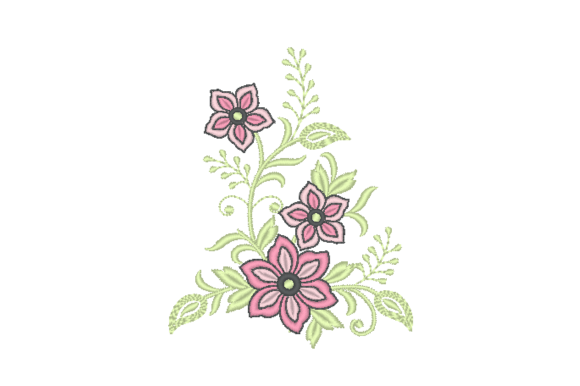
Elegant Floral Stem Embroidery Design
First Impression: Quiet Elegance That Stops Scrollers—and Shoppers
As an embroidery designer who’s prepped over 200 craft fair booths, I’ll say it straight: Elegant Floral Stem Embroidery Design doesn’t shout. It glides. The title alone tells me this isn’t a bold sunflower or a playful daisy chain—it’s refined, intentional, and rooted in botanical grace. “Elegant” sets the tone; “Floral Stem” signals subtlety over full blooms. This is a design that leans into negative space, line work, and organic flow—ideal for buyers who appreciate handmade quality over novelty. At a crowded market, it stands out by *not* competing for attention—instead, it invites closer looking, slower appreciation, and repeat visits to your booth.
Where It Shines: Craft Fair Products That Elevate the Everyday
In my weekend booth rotation, Elegant Floral Stem Embroidery Design performs strongest on pieces where simplicity reads as sophistication:
- Tote bag design: Centered on a natural canvas or oat linen tote, it reads cleanly from 6 feet away—no clutter, no visual fatigue. Perfect for eco-conscious shoppers and boutique gift buyers.
- Apron embroidery: Placed just below the pocket or along the waistband, it adds artisanal polish without overwhelming function. Works beautifully on denim, cotton drill, or lightweight linen.
- Tea towel embroidery: A single stem near the corner or wrapped subtly along the hem transforms an everyday kitchen staple into a giftable handmade product. Customers consistently pause here—especially when paired with neutral thread colors like heather grey, sage, or cream.
- Embroidered patch: Sized at 2.5–3 inches tall, this design scales elegantly. It’s versatile enough for jackets, bags, or kids’ backpacks—yet mature enough for adult buyers.
- Pillow cover & small pouch: On textured linen or velvet, the stem’s linear rhythm complements fabric tactility without fighting it. Avoid dense quilting or heavy embroidery around the motif—let the stem breathe.
What Holds It Back (And How to Fix It)
This design excels in restraint—but that also means it’s unforgiving of execution flaws. As a machine embroidery design, its success hinges on precision:
- Stitch density matters. Overly tight fills or excessive underlay in narrow stem sections can cause puckering on lightweight fabrics like chambray or tea towels. Always test on scrap with your target fabric and stabilizer combo.
- Small details demand attention. If the original embroidery file includes delicate leaf veins or fine tendrils, they may vanish on dark fabric or textured towels. Confirm visibility at 1.75x and 2.5x viewing distances—the range most craft fair customers use.
- Curved surfaces need adaptation. On caps or curved market bags, the stem’s natural line can warp if not digitized with gentle contouring. If your version lacks curve compensation, consider using it only on flat or gently rounded items—or re-digitize for 3D surfaces.
- Hoop size & spacing are silent salespeople. A design that fits comfortably in a 4x4 hoop allows faster turnaround for batch production—critical when you’re stitching 30+ tote bags before Saturday morning. Check whether the design clears your standard hoop margins without trimming.
Photography, Listings, and Online Conversion
For Etsy sellers and digital sellers, Elegant Floral Stem Embroidery Design is a quiet powerhouse. It photographs cleanly—even on phone cameras—because it relies on shape, balance, and contrast rather than busy detail. Use soft natural light and neutral backdrops to highlight its elegance. Pair printable mockups with real-life shots: a linen apron draped over a wooden chair, a tea towel folded beside ceramic mugs. That authenticity builds trust faster than any stock image.
It also supports brand consistency. Whether you sell under “Wildstem Studio” or “Hearth & Thread,” this design reinforces a cohesive aesthetic—minimalist, nature-inspired, quietly luxurious. That cohesion makes your booth feel intentional, not assembled. Buyers remember *that*.
Production Notes Every Embroidery Business Owner Should Follow
Before cutting your first production run, do these six things:
- Test the embroidery file on scrap fabric matching your final product—same weight, weave, and dye lot.
- Check thread contrast across at least three fabric colors: light, medium, and dark. Sage thread on charcoal linen? Gorgeous. But the same thread on black terry cloth may disappear.
- Review spacing between stems if using multiples—tight repeats can feel monotonous; generous spacing feels curated.
- Confirm your stabilizer choice supports both stitch definition and fabric drape. Tear-away works for stable cottons; cut-away or mesh is safer for knits or textured weaves.
- Create one finished product—not a mockup, but a real tote or pillow cover—and hold it in your hand. Does the scale feel right? Does the stem flow with the item’s shape?
- Verify commercial licensing. Since this is positioned as a Bouquets category Embroidery design for handmade markets, confirm whether the digital embroidery file permits resale of finished products. When in doubt, contact the designer or platform directly—never assume.
Final Thought: Why This Design Belongs in Your Booth Rotation
Elegant Floral Stem Embroidery Design isn’t flashy—but craft fair shoppers aren’t buying flash. They’re buying intention, care, and quiet beauty. It positions your tote bags as heirlooms, your aprons as studio essentials, and your tea towels as thoughtful gifts. It photographs well, stitches reliably (with proper prep), and scales gracefully across product types. Most importantly, it lets your craftsmanship shine—not the design itself, but *how you bring it to life*. In a sea of glitter and slogans, elegance remains rare, memorable, and deeply sellable. Keep this one in your core rotation.