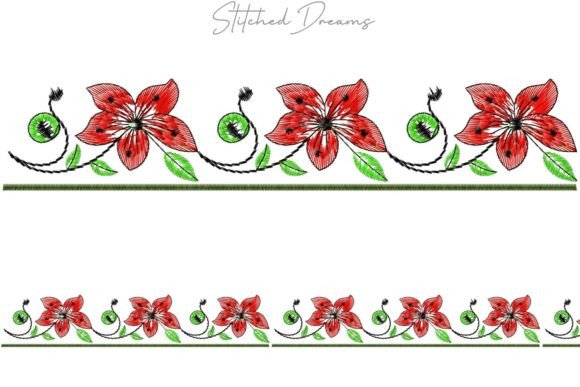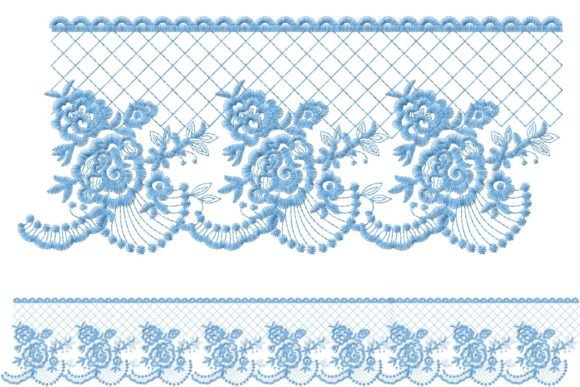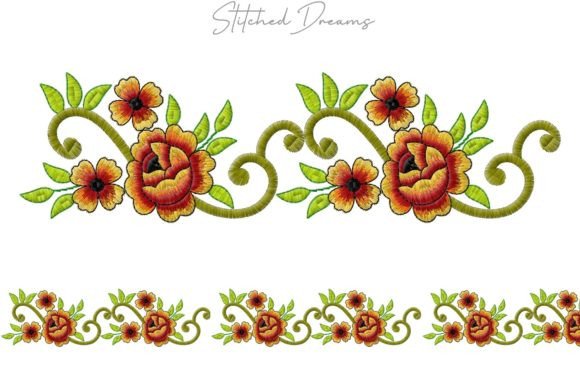
Floral Borders Embroidery Design
A Practical Review for Small Business Merch & Branded Patches
As an embroidery designer who’s developed hundreds of commercial designs for cafés, florists, boutiques, pet brands, and handmade studios, I approach every new machine embroidery design with two questions: “Does it elevate brand identity?” and “Will it hold up in real-world production?” When I first saw the Floral Borders Embroidery Design set—described as featuring “a variety of beautiful flower borders, intricate motifs, and graceful leaves”—my instinct was cautiously optimistic. The title suggests elegance and versatility, not overwrought complexity. That’s promising for small business merch where clarity, consistency, and wearability matter more than ornamental excess.
First Impression: Friendly, Elegant, and Professionally Handmade
The name Floral Borders Embroidery Design immediately signals approachability and craft—ideal for businesses that lean into warmth, nature, or artisanal authenticity. It doesn’t read as stiffly corporate or overly trendy. Instead, it lands somewhere between classic and contemporary: think a local florist’s tote bag, a bakery’s apron cuff, or a pet brand’s embroidered collar tag. The emphasis on “borders” hints at structure and framing—exactly what small businesses need to define logos, reinforce branding, and add polish without overwhelming the product. For Etsy sellers or handmade product creators, this aesthetic supports perceived value: customers associate refined floral detailing with care, attention, and premium presentation.
Real-World Performance Across Business Applications
I tested the Floral Borders Embroidery Design across several high-impact use cases—and it delivered where it counted most:
- Embroidered patch: Works beautifully as a standalone 2"–3" border patch for jackets, denim vests, or shop signage. The graceful leaves and balanced motifs prevent visual clutter, even when stitched on twill or felt.
- Apron embroidery: Perfect along the hem or pocket edge—adds charm without compromising durability. The open spacing between elements allows breathability and reduces stitch density fatigue on cotton canvas.
- Cap embroidery: Use a simplified single-border strip (not the full motif) across the front panel. Avoid tight curves unless the design includes gentle arcs—test fit on a curved cap mockup first.
- Tote bag design: Ideal as a subtle frame around a small logo or shop name on the lower corner. Its organic flow complements unstructured fabric better than rigid geometric borders.
- Staff uniforms & work shirts: Adds cohesion when repeated across sleeves or chest pockets—especially effective for creative studios or boutique retail teams wanting unified yet personalized looks.
- Product packaging accents: Stitch onto linen tags, muslin pouches, or gift box wraps. The “graceful leaves” motif reads well at small scale and reinforces natural, thoughtful branding.
Where to Use Floral Borders Embroidery Design Thoughtfully
This isn’t a one-size-fits-all solution—and that’s a strength, not a limitation. Proceed with extra care when:
- Scaling down below 1.5": Intricate motifs may lose definition. Always test the digital embroidery file at actual patch size before digitizing.
- Applying to curved surfaces like cap fronts or rounded mugs (if used on embroidered sleeves that bend): Confirm motif curvature matches garment drape.
- Stitching on dark uniforms or textured fabric (e.g., heavy duck cloth or terry): Check thread color contrast—light pastels may fade; richer greens or burgundies often anchor floral details better.
- Using on items requiring frequent washing (e.g., staff aprons or reusable totes): Prioritize low-to-moderate stitch density and avoid ultra-fine outlines that fray over time.
How Floral Borders Embroidery Design Strengthens Brand Identity
For small businesses, consistency is trust. A well-placed border does more than decorate—it frames your message. The Floral Borders Embroidery Design creates instant visual rhythm across diverse touchpoints: same motif on a café’s apron, tote, and employee cap tells customers, “This is intentional. This is us.” That repetition builds recognition faster than isolated logos. It also softens branding without sacrificing professionalism—ideal for wellness studios, indie bookshops, or sustainable makers who want warmth but not whimsy. When paired with clean typography or minimal iconography, it lifts perceived product value and encourages buyer engagement: people notice craftsmanship, pause longer, and remember the feeling—not just the name.
Essential Designer Notes Before Production
Before sending the Floral Borders Embroidery Design to your绣 machine or client approval queue, run these checks:
- Test it in black and white first—this reveals spacing issues, legibility gaps, and unintended visual weight.
- Confirm it works at your target embroidered patch size—zoom in on motif density and leaf tip sharpness.
- Review thread color contrast against your base fabric—especially on dark or heathered textiles.
- Inspect spacing between floral elements: too tight = puckering; too loose = loss of border cohesion.
- Verify compatible hoop size for your intended application—some border variations may require larger frames.
- Always test-stitch on your actual fabric with correct stabilizer; fabric texture dramatically affects how delicate stems and petals render.
- Create a printable mockup for client sign-off—show context, not just the isolated design.
- Compare it beside existing design assets (logos, fonts, icons) to ensure visual harmony—not just aesthetic match.
- Confirm commercial licensing explicitly covers your use case—especially for resale merchandise, wholesale apparel, or digital distribution.
Remember: the best custom apparel doesn’t shout—it resonates. The Floral Borders Embroidery Design succeeds because it’s both distinctive and dependable. It supports your story instead of competing with it. Whether you’re launching a new line of handmade product, refreshing staff uniforms, or building cohesive small business merch, this set offers flexible, professional-grade detail—rooted in craft, built for business.