Floral Scissor Embroidery Design Review
First Impression: Whimsy Meets Practicality
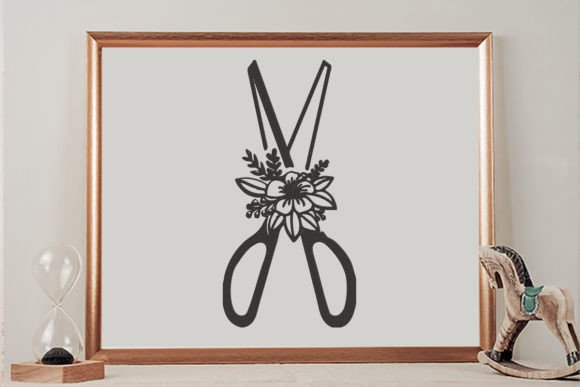
As an embroidery designer who’s prepped over 200 craft fair booths—and shipped thousands of embroidered tote bags, tea towels, and market pouches—I opened Floral Scissor expecting charm. What I got was something sharper: a design that balances playful floral energy with clean, intentional structure. It doesn’t read as overly rustic or aggressively modern—it lands in that sweet spot between farmhouse warmth and boutique-ready polish. The title alone hints at utility (scissors) and softness (floral), making it instantly memorable for shoppers scanning a crowded booth. For Etsy sellers and small shop owners, that duality is gold: it appeals to both practical crafters and gift buyers looking for handmade personality.
Where Floral Scissor Shines on Craft Fair Products
Tote bags are the undisputed hero for Floral Scissor. Positioned just below the handle seam or centered on the front panel, it reads clearly from six feet away—no squinting required. Its balanced proportions hold up beautifully at 3.5"–4.5", giving visual weight without overwhelming the fabric. On aprons, it works best above the pocket or subtly tucked into a corner hem—adding quiet charm without competing with functional details. For tea towel embroidery, it’s ideal near the top border or folded corner; the floral motif echoes kitchen garden vibes while the scissor shape nods to maker identity.
Floral Scissor also elevates smaller items with surprising impact. As an embroidered patch, it gains versatility—iron-on or sew-on versions sell well to Cricut crafters and beginner stitchers. On caps, test placement carefully: the design’s vertical flow suits the curve of a front panel better than a flat side panel. And on pillow covers or fabric pouches, it adds boutique-level distinction—especially when stitched in tonal thread on linen or oatmeal cotton.
Real-World Production & Selling Strengths
This machine embroidery design earns high marks for booth-readiness. It’s intuitive at a glance—no decoding needed. Shoppers instantly “get” the concept, which means faster decisions at craft fairs where attention spans are measured in seconds. It scales cleanly: effective as a 2" accent on a keychain or a 5" focal point on a market bag. That flexibility makes batch production efficient—whether you’re stitching 12 aprons for a local boutique or 50 tea towels for an Etsy launch.
Photography is another win. Floral Scissor captures well on light and mid-tone fabrics, delivering crisp contrast in natural light—critical for printable mockups and Etsy listings. Its balanced stitch density avoids the “muddy” look some floral designs develop under flash, and its clean outer edges prevent fraying during trimming. As a small shop product, it supports brand consistency: whether used on a linen pouch or a denim cap, it reinforces a cohesive, thoughtful aesthetic—not just decoration, but signature style.
Careful-Use Notes for Best Results
While Floral Scissor is highly adaptable, success hinges on mindful execution. Avoid placing it on heavily textured towels (like thick waffle weave) unless you’ve tested stabilizer layers—dense stitch areas may sink or blur. On dark fabric, confirm thread contrast: pale pastels can disappear without careful color selection. Tiny stem details or fine petal outlines may lose clarity below 2"—so skip using it as a micro-accent on cuff bands or tiny tags.
Curved surfaces like cap fronts demand precise hooping and possibly reduced stitch density—always run a test on scrap fabric first. Also, if your version includes lettering (the description says “comes with mu…”—likely cut off), verify legibility at intended size. Not all digital embroidery files handle small text reliably across machines.
Design Assets That Support Your Business
Beyond aesthetics, Floral Scissor functions as smart design assets. It pairs effortlessly with other Single Flowers motifs for themed collections—think “Scissor + Daisy + Thimble” sets for spring markets. Its clean lines translate well into line-art versions for printable packaging labels or social media graphics. As a commercial embroidery asset, it strengthens perceived value: customers recognize hand-stitched precision, especially when paired with quality materials like organic cotton or heavyweight linen.
For handmade product sellers, this design quietly signals craftsmanship. It’s not generic clip art—it feels intentional, curated, and made *for* makers. That perception lifts price points naturally and builds trust in your booth or shop. At a craft fair, three well-executed Floral Scissor items—a tea towel, a pouch, and a cap—can anchor an entire display, drawing eyes and inviting conversation.
Essential Embroidery Designer Notes Before You Stitch
- Always test the design on scrap fabric matching your final product’s weight and texture.
- Check thread colors against your base fabric in daylight—not just under studio lighting.
- Review spacing and alignment—especially if layering with text or borders.
- Confirm hoop size compatibility with your machine and intended product (e.g., cap frames vs. standard hoops).
- Inspect stitch density: adjust if needed for delicate fabrics or heavy stabilizers.
- Match stabilizer type to fabric—cutaway for knits, tear-away for stable wovens, fusible for lightweight linens.
- Create at least one real mockup before bulk production—see how it drapes, wears, and photographs.
- Compare results across multiple fabric colors—what sings on ivory may mute on charcoal.
- Verify commercial licensing before selling finished products—this is non-negotiable for Etsy sellers and wholesale partners.
Final Thought: A Quiet Standout
In a sea of busy patterns and oversized florals, Floral Scissor stands out by being both useful and beautiful—just like the best craft fair products should be. It doesn’t shout. It invites. It sells because it feels personal, intentional, and unmistakably handmade. Whether you're building a digital embroidery file shop, launching a line of market bags, or filling your Etsy store with small shop products, this Embroidery design earns its place—not as filler, but as a trusted, repeatable favorite. Now go stitch something lovely.