Floral Sloth: A Brand-Ready Embroidery Design
First Impression: Playful, Polished, and Perfectly On-Brand
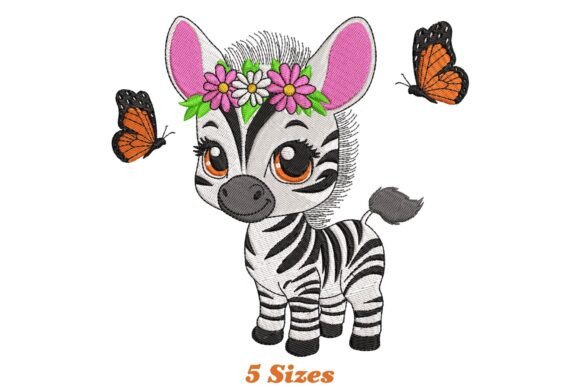
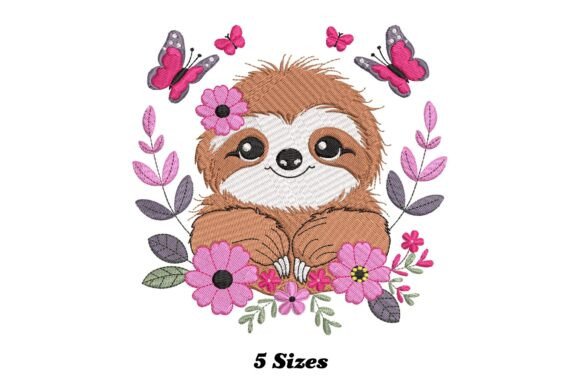
As an embroidery designer who’s developed hundreds of commercial designs for small businesses, my first thought when I saw Floral Sloth was: “This isn’t just cute—it’s commercially intelligent.” The name alone signals a rare balance—wild animal charm meets botanical softness, making it instantly memorable without feeling juvenile or overly literal. It reads as friendly but not childish, handmade but not amateurish, and quirky without sacrificing polish. For a café that serves lavender lattes, a florist launching branded totes, or a pet wellness brand adding embroidered accents to aprons, Floral Sloth delivers visual warmth with subtle sophistication.
Real-World Business Use: Where This Design Truly Shines
Floral Sloth performs exceptionally well across high-impact small business merch categories—especially where personality and approachability matter. As an embroidered patch, it holds crisp detail at 2.5”–3.5”, making it ideal for sew-on branding on tote bags, denim jackets, or staff uniforms. On aprons and work shirts, its organic shape flows naturally over curved seams and pockets—no awkward stretching or distortion. For cap embroidery, the sloth’s centered posture and moderate width (assuming standard design proportions) translate cleanly to front panels—even on structured cotton twill, provided proper stabilizer is used.
This machine embroidery design also excels in boutique merchandise: think limited-run tea towels for a local bakery, linen napkins for a floral studio, or reusable produce bags for a sustainable grocer. Its “fun and quirky flair” doesn’t compete with product function—it enhances it. As a chest logo accent on crewneck tees or a sleeve detail on relaxed-fit blouses, Floral Sloth adds brand recognition without overwhelming the garment. And because it leans into illustration rather than photorealism, it scales beautifully in printable mockups—a huge time-saver when pitching to clients or building Etsy listings.
Where to Apply Caution—Not Limitation
Like any strong digital embroidery file, Floral Sloth demands thoughtful execution—not caution born of weakness, but respect for craft. Avoid pushing it below 1.75” unless you’ve tested the stitch density and outline clarity on your actual fabric. Tiny versions risk losing petal definition or sloth expression, especially on textured weaves like canvas or terry cloth. Cap fronts with deep curvature (e.g., low-profile mesh backs) may require re-hooping or digitized adjustments—always test on a cap blank before full production.
Dark uniforms? No problem—but confirm thread color contrast in advance. A light sage or buttery yellow works beautifully against navy or charcoal, but avoid pale pastels on black without checking luminance values. Also, if the original embroidery file includes fine stem lines or tightly spaced floral elements, verify spacing integrity at production scale. Overly dense fills can cause puckering on lightweight knits or delicate linens—so choose stabilizer wisely: cutaway for stability on stretch fabrics, tear-away for stable wovens like cotton poplin.
Brand Identity Impact: More Than Just a Logo
Small business owners often underestimate how much an embroidered element shapes perception. Floral Sloth quietly reinforces key brand attributes: care (through botanical motifs), calm (sloth’s gentle posture), and creativity (the unexpected pairing). Unlike generic script logos or overused icons, this design tells a micro-story—making it easier for customers to remember, connect with, and trust your business. When stitched onto staff aprons at a neighborhood florist, it signals attention to detail and joy in the craft. When featured on customer gift totes, it elevates perceived value—not because it’s flashy, but because it feels intentional and human-made.
Consistency matters too. If you’re using Floral Sloth alongside other design assets—say, a hand-drawn typography logo or watercolor packaging—the embroidery should harmonize, not clash. Its illustrative style bridges digital and tactile, supporting a cohesive handmade product aesthetic without requiring full custom illustration from scratch.
Practical Designer Notes for Commercial Success
Before committing to bulk production, run these checks:
- Test in black and white first—this reveals balance, weight distribution, and legibility better than color.
- Check small-patch viability at your target size (e.g., 2” x 2”) on your embroidery software’s preview mode.
- Review thread color contrast across your most common fabric backgrounds—especially darks and heathers.
- Inspect spacing between floral elements and sloth limbs; tight gaps may close up during stitching.
- Confirm hoop size compatibility—if your shop uses 4x4 hoops exclusively, ensure the design fits without excessive re-hooping.
- Test on real fabric—not just stabilizer swatches—with your usual needle, thread, and machine tension settings.
- Create a client-approved mockup before stitching the first dozen units—avoid costly revisions later.
- Compare beside existing assets: Does Floral Sloth complement your current logo, website palette, and packaging?
- Verify commercial licensing—since this is intended for small business merch, custom apparel, and commercial embroidery, confirm the license permits resale, branding, and derivative use.
In summary, Floral Sloth is more than a charming Wild Animals motif—it’s a versatile, brand-forward embroidery asset built for real-world business impact. Whether you're an Etsy seller launching embroidered tea towels, a café outfitting baristas in custom aprons, or a craft studio creating signature patches for wholesale, this design earns its place in your production queue—not as decoration, but as deliberate brand language.