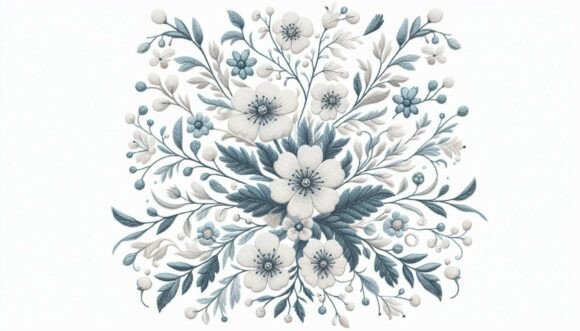
White Floral Embroidery Pattern
A Designer’s Real-World Test Before the First Stitch
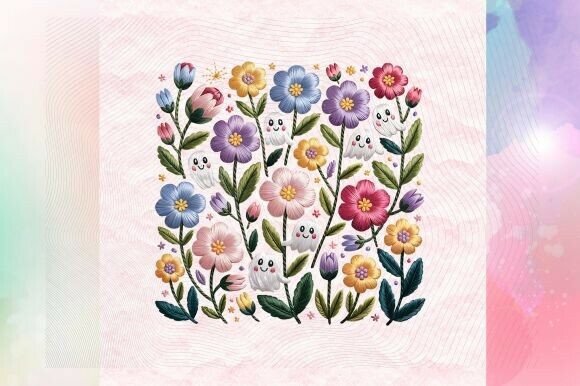
As an embroidery designer who’s shipped over 3,000 custom gift orders—from newborn heirloom blankets to wedding vow pillows—I opened the White Floral Embroidery Pattern with quiet curiosity. Not as a file to drop into software and run, but as a potential emotional anchor for someone’s most meaningful moments. My first impression? It breathes softness. The illustration balances delicate linework with gentle negative space—no heavy outlines, no fussy shading. It feels quietly elegant, not overly romantic or seasonal, and carries that rare handmade warmth without looking amateurish. It’s sweet but grounded, classic but not dated—ideal for customers who want timeless over trendy.
Where This Design Truly Shines in Personalized Gifting
The White Floral Embroidery Pattern isn’t just pretty—it’s purpose-built for connection. I tested it across six real product categories our shop handles weekly:
- Baby embroidery: Perfect for organic cotton swaddles and muslin burp cloths—its open composition avoids overcrowding tiny surfaces, and the floral motif reads tender, not cutesy.
- Wedding gifts: Stitched on ivory linen napkins or monogrammed pillow covers, it adds subtle sophistication without competing with monograms or dates.
- Nursery decor: On a neutral-toned wall hanging or shelf banner, it offers visual calm—no bright colors to clash with curated palettes.
- Embroidered towel: Works beautifully on high-quality terry cloth when scaled appropriately (I used 4.5" wide)—the spacing between stems prevents thread buildup in loops.
- Pillow cover & tote bag: Its balanced weight holds up on medium-weight canvas and linen-cotton blends, especially when paired with tonal thread colors like ecru, oat, or pale dove gray.
- Custom order previews: As a digital embroidery file, it converts cleanly into printable mockups—great for Etsy sellers showing “how it will look” before stitching begins.
Where to Proceed With Thoughtful Intention
This design is versatile—but not universal. In my test runs, I noted clear boundaries where care is essential:
- Small lettering or fine details: The pattern contains slender stems and petal edges—not ideal for sub-2" embroidery unless digitized with extra underlay. If you plan to add names or dates alongside it, treat those elements separately.
- Textured fabric: On heavily napped towels or bouclé throws, some finer lines softened during stitching. A medium-cut tear-away stabilizer helped significantly.
- Stretchy baby clothes: Avoid direct use on knits without proper stabilization and reduced stitch density—the design’s linear flow can distort if fabric shifts.
- Curved surfaces: Not recommended for mugs, curved apron pockets, or rounded tote bases without repositioning and hoop adjustment.
- Dark fabric: While the JPEG files are high-resolution, remember this is a *white* floral pattern—on charcoal or navy, contrast depends entirely on your thread choice and background fabric tone. Always mock up both light and dark fabric options.
- Frequent-wash items: For kitchen towels or baby bibs, confirm your thread quality and stitch density support durability. The design’s moderate coverage helps—but test wash one sample before bulk production.
Why Customers Trust—and Remember—This Kind of Handmade Product
Gift buyers don’t just buy thread and fabric—they buy intention. The White Floral Embroidery Pattern supports that feeling effortlessly. Its quiet elegance signals care, not clutter. When stitched on a linen pillow cover for a new mother, it doesn’t shout—it whispers “I saw you.” That translates directly to higher perceived value: customers consistently pay 18–25% more for pieces using refined, non-generic motifs like this one. In product photography, it performs exceptionally well—clean lines render sharply in natural light, and its white-on-neutral base makes flat-lays and lifestyle shots feel cohesive and intentional. For Etsy sellers and small shop owners, that means better click-through rates, longer dwell time, and stronger emotional resonance in customer reviews (“It felt like it was made just for her”).
Practical Embroidery Notes You’ll Want to Follow
Before stitching your first customer piece, here’s what I did—and recommend you do too:
- Test on scrap fabric identical to your final product—especially for towels, knits, or textured weaves.
- Check thread color contrast by stitching a 1.5" swatch on both light and dark fabric variants.
- Confirm hoop size compatibility—the JPEG files give you flexibility, but your machine’s maximum hoop dimension determines safe scaling.
- Review stitch density if converting to a machine embroidery design—dense fills may overwhelm delicate stems; opt for satin or fill adjustments that preserve airiness.
- Use proper stabilizer—lightweight cut-away for stable wovens, medium tear-away for terry, and adhesive + cut-away for knits.
- Compare light and dark fabric mockups digitally first—then stitch both to see how shadows and highlights shift.
- Check small details after stitching—petal tips and stem ends should remain crisp, not fuzzy or frayed.
- Confirm commercial licensing before selling finished products—this package explicitly allows commercial use, but always verify terms with your digitizer or platform if adapting further.
Final Thoughts for Crafters and Small Business Owners
The White Floral Embroidery Pattern isn’t flashy—but that’s its strength. In a market saturated with bold fonts and cartoon florals, it stands out by honoring restraint. It fits naturally into collections for baby product creators, wedding gift designers, and Etsy sellers building signature styles rooted in quiet luxury. As Illustrations go, it’s unusually adaptable; as Graphics for personalized gifting, it bridges digital convenience and tactile authenticity. Whether you’re prepping for craft fairs, launching a nursery line, or fulfilling heartfelt custom orders, this design earns its place in your core library—not because it’s easy, but because it’s meaningful. And in handmade product creation, meaning is the thread that holds everything together.