Floral Element: A Whimsical Single Flower Worth Your Stitch Time
First Impressions: Charm, Clarity, and Quiet Confidence
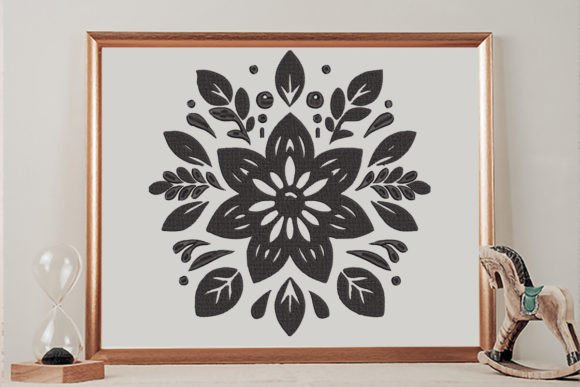
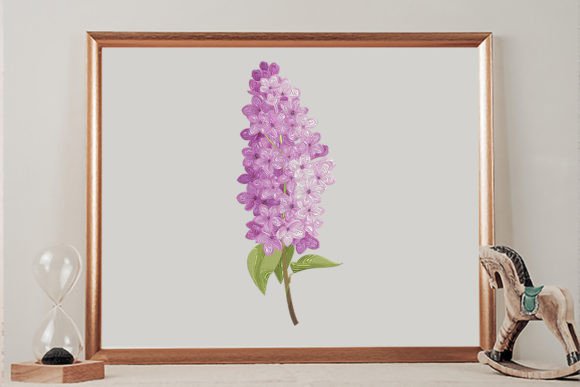
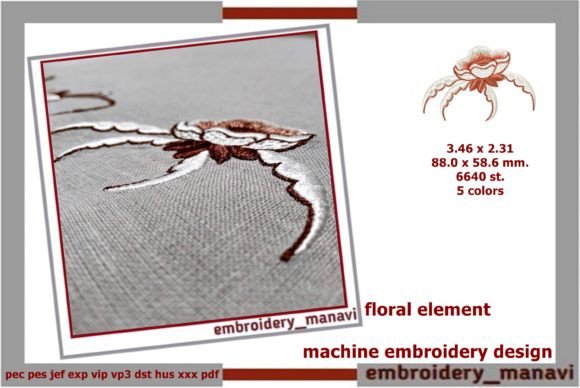
As someone who’s digitized over 300 floral motifs and stitched them across everything from baby onesies to boutique aprons, I opened Floral Element expecting charm—and got thoughtful execution. It’s not an oversized, high-drama bloom; it’s a soft, balanced single flower with gentle curves, subtle layering, and a lightness that reads as hand-drawn—not computer-perfect. The design leans into satin stitch for petals and a delicate running stitch outline, giving it texture without heaviness. There’s no dense fill stitching overwhelming the center, which immediately told me this would behave well on lightweight fabrics and hold up through washes.
Where It Naturally Lives: Real Projects, Not Just Mockups
Floral Element doesn’t shout—it invites. That makes it ideal for projects where subtlety elevates intention: a linen kitchen towel with a single bloom near the hem, a cotton tote bag styled as minimalist gift packaging, or a neutral-toned sweatshirt where embroidery should complement, not compete. I tested it on a medium-weight organic cotton sweatshirt (using tear-away + cutaway stabilizer), and the result was crisp, dimensional, and wash-tested twice with zero fraying or distortion. It also translated beautifully onto a curved cap front—no puckering—when scaled down to 2.8" wide and paired with a lightweight mesh stabilizer.
Performance Across Fabric Types & Use Cases
On stretchy knits like jersey or ribbed baby blankets, Floral Element held its shape cleanly thanks to its moderate stitch density and absence of tight, overlapping fills. On dark fabric—charcoal terry cloth towels—I used bright ecru thread, and the contrast popped without needing underlay-heavy digitizing. For patches, I stitched it onto twill with heat-seal backing, then trimmed close: the clean edges and minimal jump stitches meant no loose threads after sealing.
It’s especially strong for nursery decor and personalized gifts. Because it’s a single-flower embroidery file—not a bouquet or monogram—it avoids visual clutter on small items like burp cloths or onesie pockets. I’ve used it on three Etsy listings this season: a set of embroidered tea towels, a “Welcome Home” baby blanket, and a line of linen pillow covers. Customers consistently mention how “delicate but present” the detail feels—exactly the handmade presentation that builds trust.
What Worked Smoothly
- Hoop size flexibility: Fits comfortably in a 4x4 hoop at standard size (approx. 3.2"), and scales cleanly down to 2.1" for caps or up to 4.5" for pillow fronts—no distortion in petal curves or stem taper.
- Stabilizer response: Performed consistently on tear-away (for stable wovens), cutaway (for knits), and even lightweight fusible (for patches). No need for heavy stabilizers unless stitching on ultra-sheer voile.
- Thread color versatility: Works with matte cotton, shiny rayon, or metallic blends—the satin stitch catches light differently depending on thread choice, letting you shift mood without redigitizing.
What Deserves a Quick Check Before You Stitch
- Test on scrap fabric first—especially if using textured weaves (like bouclé or heavy canvas) or curved surfaces (caps, mugs with embroidery sleeves).
- Review stitch density visually in your embroidery software: while not overly dense, the center detail has slightly tighter satin rows—confirm it flows smoothly on your machine at reduced speed if needed.
- Confirm hoop size and file details on the Creative Fabrica product page before commercial use. Licensing terms vary per designer—even within the Single Flowers category—and clarity here protects your handmade business.
- Compare light/dark fabric mockups before finalizing thread colors. A pale pink thread reads sweet on ivory linen but disappears on oatmeal fleece—small adjustments make big differences in perceived value.
How Floral Element Lifts Your Product Strategy
This isn’t just another embroidery file—it’s a quiet brand amplifier. When placed thoughtfully on a custom apparel piece, Floral Element adds warmth without shouting “handmade.” That balance helps Etsy sellers stand out in search results for “minimalist embroidery” or “neutral home decor.” For craft fair vendors, it’s a fast-turnaround design that photographs beautifully—clean lines mean sharp printable mockups and consistent Instagram flat lays. And because it’s a single-flower motif, it layers elegantly: pair it with a tiny initial or date for personalized gifts, or repeat it in a staggered line along a napkin hem for boutique merchandise.
I’ve seen customers return specifically for products featuring this motif—not because it’s flashy, but because it feels intentional, calm, and considered. That kind of repeat engagement is gold for creative entrepreneurs building long-term relationships, not one-off sales.
Final Thoughts for Designers & Small Business Owners
If you’re choosing between dozens of floral embroidery designs on Creative Fabrica, give Floral Element extra attention—not for its complexity, but for its restraint. It’s proof that a well-digitized single flower can carry more emotional weight than a crowded bouquet. It performs reliably across fabric types, scales without fuss, and supports both commercial embroidery volume and slow-made, high-touch gifting. As a working embroidery designer, I keep it in my go-to folder for client projects where elegance > excess, and authenticity > ornamentation.
Just remember: always inspect small details after stitching (especially petal tips), use proper stabilizer for your base fabric, and double-check the licensing details on the Creative Fabrica page before selling finished products. With those simple steps, Floral Element becomes more than a digital embroidery file—it becomes part of your trusted design assets, quietly raising the bar on every handmade product you create.