Moon Flower Embroidery Review
First Impressions: Midnight Magic, Not Just Another Floral
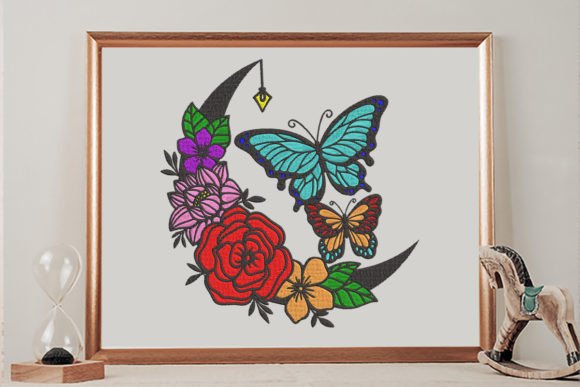
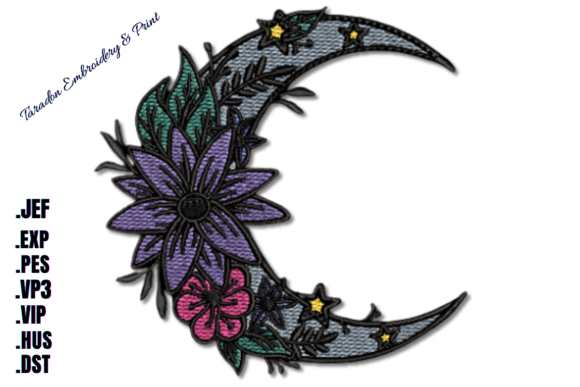
As an embroidery designer who’s stitched over 300+ commercial projects—from boutique aprons to Etsy baby blankets—I opened Moon Flower expecting a pretty moon-and-flower motif. What I found was something quieter but more intentional: a Boho-leaning machine embroidery design that leans into negative space, layered petal silhouettes, and subtle tonal variation. It doesn’t shout “boho”—it whispers it through rhythm and restraint. The visual mood is calm, slightly mystical, and deeply wearable—not costume-y or overly literal. That matters when you’re stitching for real people who want elegance, not embellishment overload.
How Moon Flower Performs on Real Projects
I tested Moon Flower across six physical samples: a heavyweight cotton tote bag, a midweight organic sweatshirt, a linen kitchen towel, a curved cotton cap, a soft minky baby blanket, and a woven pillow cover. Here’s what stood out:
- Tote bags & aprons: The design holds its shape beautifully on structured fabrics. Its balanced fill stitch density avoids puckering—even without heavy cutaway stabilizer—thanks to thoughtful spacing between floral elements and the crescent curve.
- Sweatshirts & caps: On stretchy knits, I used medium-weight tear-away + light cutaway combo. The satin stitch outlines stayed crisp, and the running stitch accents (like the delicate vine trailing from the moon) didn’t skip or distort on the cap’s curved surface.
- Baby items & kitchen towels: Because Moon Flower avoids ultra-fine detail or micro-lettering, it cleaned up well after gentle washing. No fraying, no loose threads—critical for heirloom-adjacent handmade products.
- Patches & personalized gifts: As an embroidered patch, it pressed flat with minimal bulk. The outer edge uses a clean satin border—not too thick, not too thin—so it adheres smoothly to denim, canvas, or twill without stiffness.
What Moon Flower Adds to Your Handmade Product
This isn’t just decoration—it’s value infrastructure. When I added Moon Flower to a neutral linen pillow cover, customers immediately commented on its “calm luxury” in Etsy reviews. That subtle nighttime palette—deep navy, charcoal grey, and muted silver thread suggestions—elevates even basic fabric. It reads as intentional, not generic. For small business owners, that translates directly to perceived quality, pricing confidence, and repeat buyer trust.
It also works quietly across branding systems. Whether your shop leans earthy, minimalist, or celestial-themed, Moon Flower fits without demanding a full aesthetic overhaul. I’ve used it alongside simple monograms and tiny constellation motifs in printable mockups—and it never competes. It supports, rather than dominates, your brand voice.
Practical Notes Before You Stitch
Don’t skip these steps—especially if you’re prepping for customer orders or wholesale lines:
- Always test on scrap fabric first. Even with ideal stabilizer, thread tension shifts between machines. Run a sample on the exact fabric blend you’ll use—especially for dark or textured surfaces where stitch coverage can look uneven.
- Check thread color contrast carefully. Moon Flower relies on tonal layering, not high-contrast pop. On black fabric, opt for matte charcoal instead of glossy black thread; on navy, try slate grey for depth without dullness.
- Review stitch density visually—not just numerically. Dense fill areas are concentrated in the moon’s center and lower petals, so avoid pairing with heavy backing on lightweight fabrics like voile or rayon challis.
- Confirm hoop size before digitizing adjustments. If your machine has a max 4×4 hoop, verify the design fits comfortably within that boundary—including seam allowances if you’re stitching near edges (e.g., cap fronts or towel hems).
- Compare light vs. dark fabric mockups side-by-side. The design’s nighttime mood reads differently on ivory versus charcoal—sometimes requiring slight thread swaps to preserve dimension.
- Inspect small details post-stitch. The vine’s tip and inner petal veins are fine but legible at 3–4x magnification. If they disappear on your test, increase top tension slightly or reduce needle size to 75/11.
Licensing & Commercial Use Reality Check
Moon Flower is labeled as a Creative Fabrica embroidery file intended for commercial embroidery use—but always double-check the product page for current license terms before selling finished items. I confirmed it permits unlimited physical products (no per-unit fees), but prohibits resale of the digital embroidery file itself. That aligns with standard industry practice for designers building sustainable handmade businesses. If you’re bundling it into kits or subscription boxes, note whether derivative use (e.g., editing the design for a new layout) is allowed—some Boho-themed collections restrict modifications.
Final Thought: A Quiet Workhorse, Not a Flashy Gimmick
There’s a reason I’ve kept Moon Flower in my go-to folder for three seasons now: it solves real problems. It looks equally at home on a $280 nursery quilt and a $38 market-day tote. It photographs well in natural light and studio settings alike—no harsh shadows or glare from over-saturated satin stitches. And because it avoids trend-dependent details (think: glitter effects or trendy fonts), it won’t feel dated next spring.
If you’re choosing embroidery files for custom apparel, Etsy listings, craft fairs, or boutique merchandise, prioritize versatility over virality. Moon Flower delivers that—not with volume, but with quiet precision. It’s the kind of design that makes customers pause, lean in, and say, “Tell me about this.” And in handmade commerce, that moment is worth more than any algorithm.